
 Fortnox
 Visma
Visma SAP
SAP Oracle NetSuite
 Microsoft Dynamics
 Xero
Xero QuickBooks
 Sage
Sage Tripletex
 Hogia
Hogia Gmail
Gmail OutlookFortnoxVismaSAPOracle NetSuiteMicrosoft DynamicsXeroQuickBooksSageTripletexHogiaGmailOutlookFortnoxVismaSAPOracle NetSuiteMicrosoft DynamicsXeroQuickBooksSageTripletexHogiaGmailOutlook
[ How the agents work ]
Connect your systems. The agents do the rest.
Invoices, payments and debtor emails in. Reminders, payment matching and escalation out. You choose auto-pilot or co-pilot per action.

- ERPFortnox, Visma, more
- BankReads your incoming payments
- MailboxGmail, Outlook
- CRMCustomer context in
- Payment matchingAutomatic, tied to the right reminder
- Reminders sentBefore due to final notice
- Debtor replies handledDrafts or auto-replies
- Escalation when neededDebt collection via PS Finance
The life of one overdue invoice.
Follow a single invoice from before the due date to collected. Four steps, one agent making the calls, one operator steering.
Connected to everything you already use.
Your bank, your accounting system and your email. Straight through open banking and API, no exports, no double entry.




Your bank is already connected.
Superclaim reads incoming payments automatically, whichever bank your customer uses, and matches them to the right invoice and reminder. The globe shows the banks in your country.
 Calculator · 2 minutes
How much capital is sitting still in your receivables?
Three numbers about your receivables give you a decision brief with what the delays cost and what can be freed. Every assumption is written out.
Run your numbersThe operator cockpit.
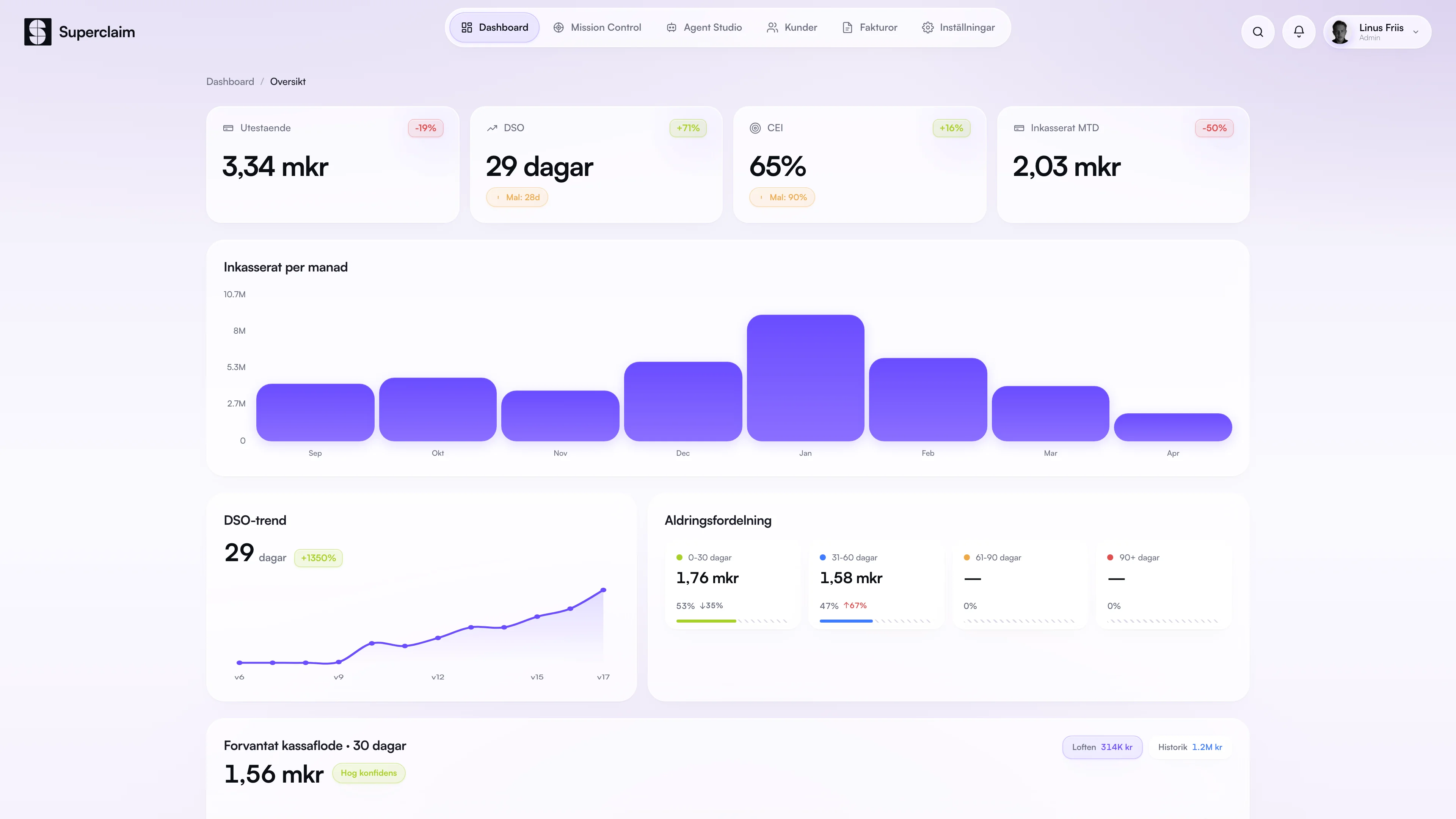
Three surfaces you run the whole ledger from: the invoices synced in, the agent you configure, and Mission Control where you approve.
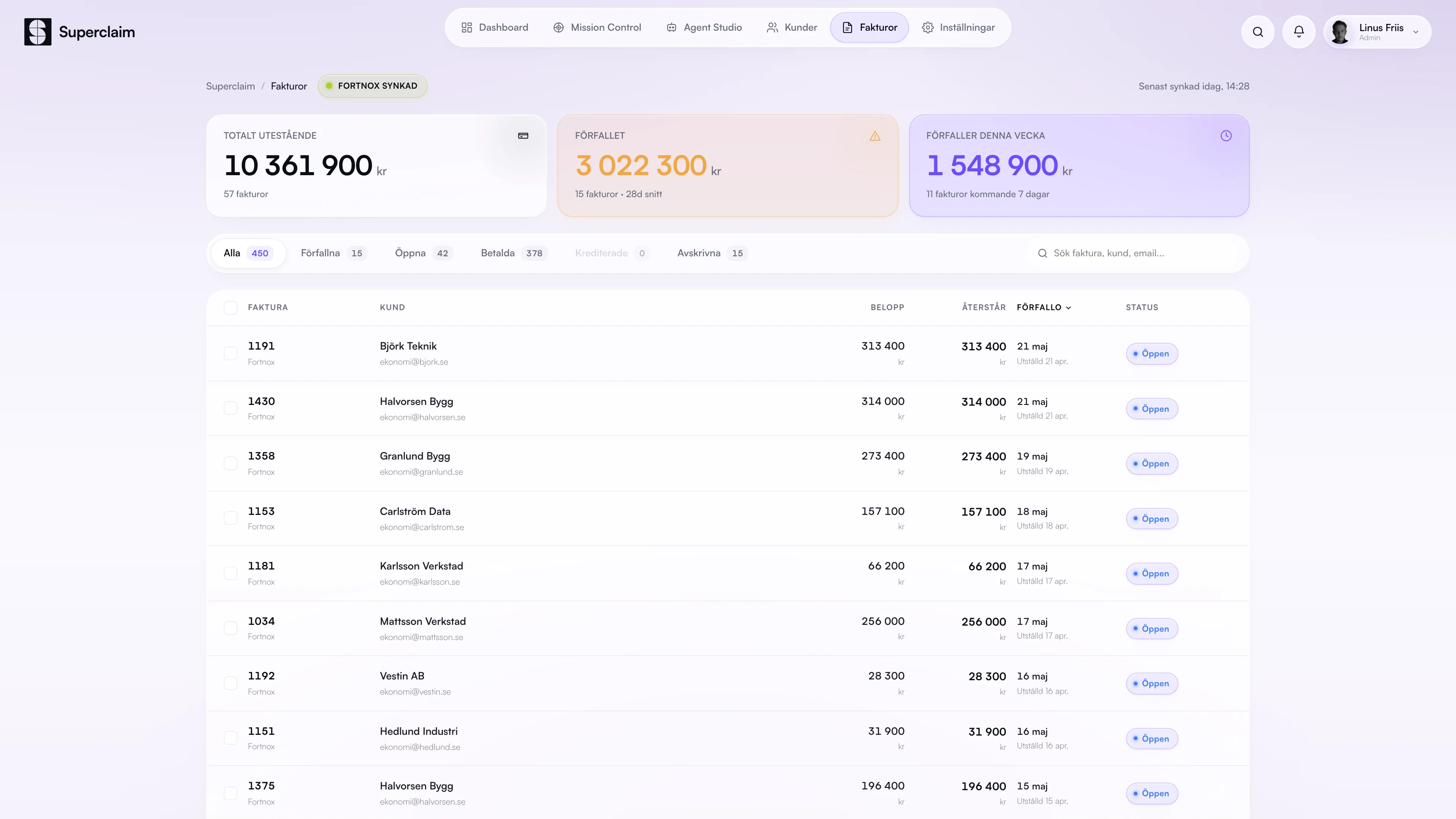
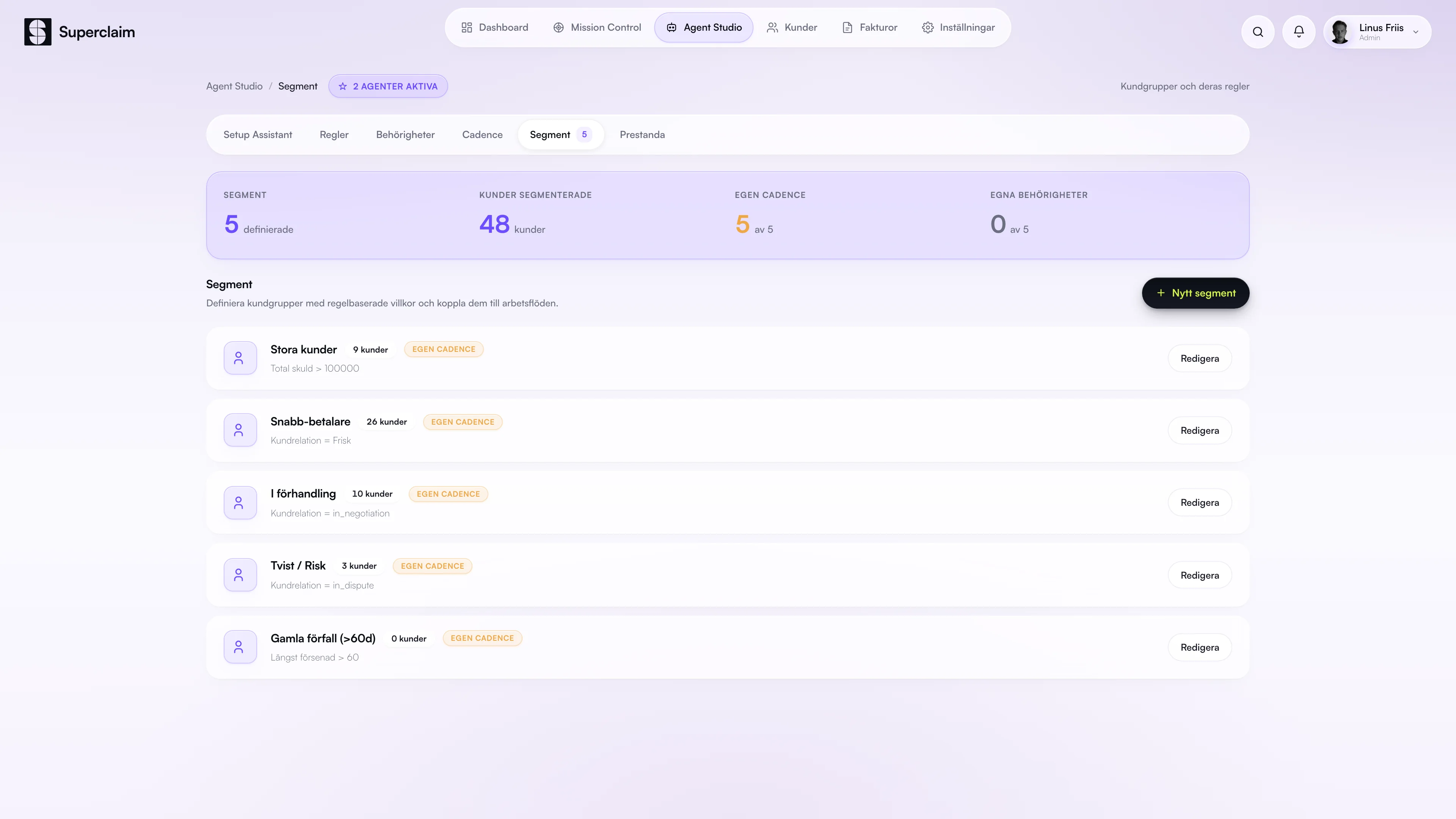
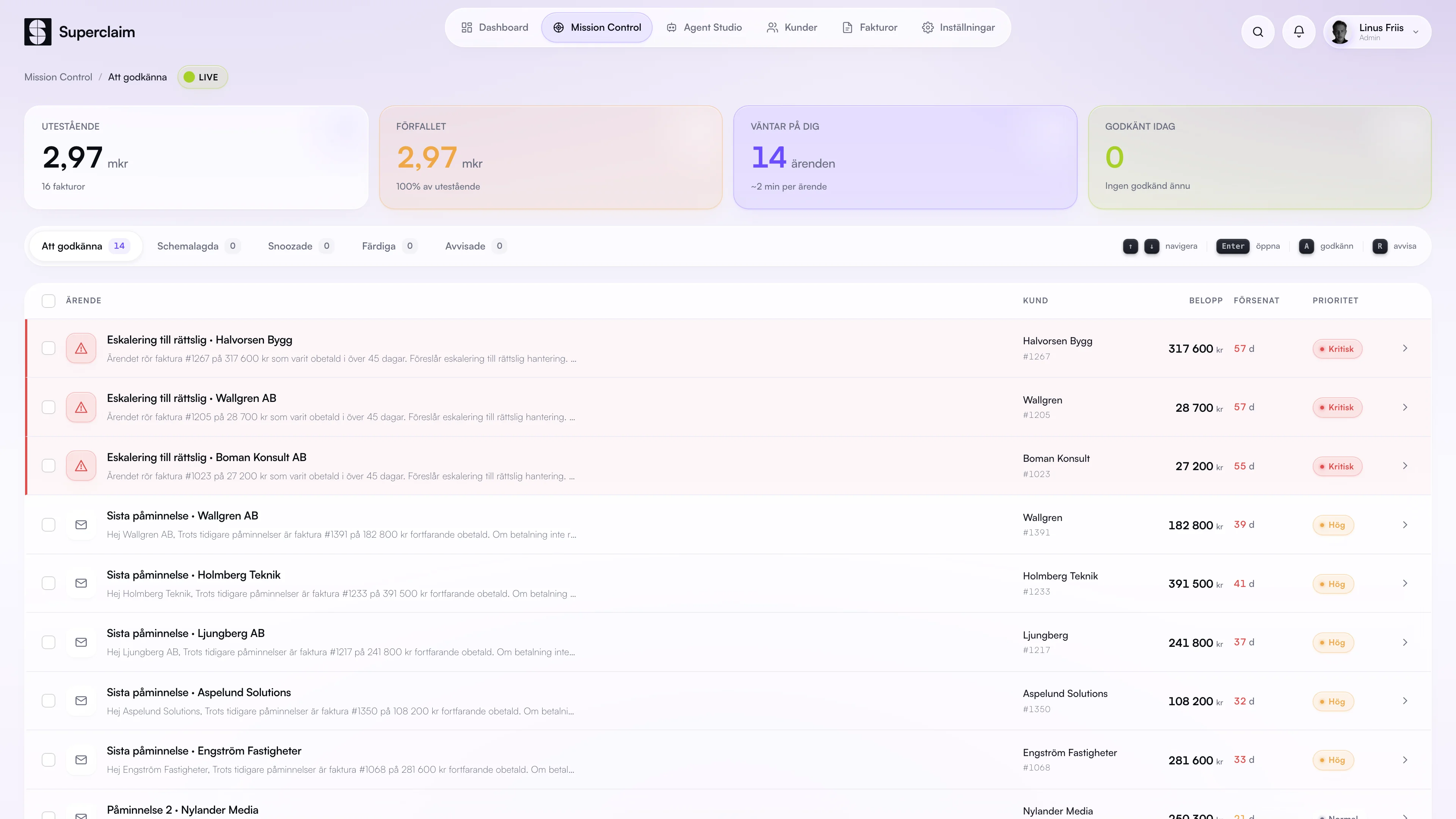
Everything you need to run receivables.
Payment matching
The payment is matched to the exact reminder that drove it in.
Auto-pilot & co-pilot
Choose the mode per action and risk, and per customer group. New companies start with everything on co-pilot.
Segments & rules
Set tone, timing and autonomy per customer segment. The agent stays inside your limits.
Collections via PS Finance
Escalate stalled cases and follow the collection case live, without leaving Superclaim.
Reflexion
The agent validates its own draft before it acts, for fewer mistakes in live mode.
Who it is for
One operator steers. The agents do the work.
The same thread, but someone is holding the end of it. Messy in, one operator in the middle, a clean result out. Superclaim does not replace the team. It removes the chasing.
Many outstanding invoices and a ledger that has slipped through the cracks. The agents take the whole list, from before the due date all the way to escalation. You make the decisions.
You run receivables for many companies at once. One operator steers them all, without switching systems for every client. Support for 30+ business systems.
You want the repetitive chasing gone but the calls that need judgement kept. Everything recurring goes to the agent. Everything that needs a judgement call comes back to you.
- Co-pilot
- How every new company starts: the agent proposes, you approve everything. Live within 24 hours, and setup takes about an hour.
Questions and answers
The most common questions we get about Superclaim and AR automation.